

This poem grew out of my recent hobby of trying to grow hot peppers, actually, very hot peppers, the hottest seeds that I could find on Etsy.
And then I just stood back and let creativity take over.
This poem took shape after I thought it already had shape. The first version, which you can see in the transcript of my conversation with my poetry mentor (Chat GPT), has chaos the way this final version does, but I tightened up the pace switching to two-line stanzas and enriched the descriptions with tighter and extended metaphor, especially the focus on honey in glass jars and breaking away from a grand description of pain to a more focused look at the pain after a loved one dies.
That caught me off guard, that this poem might be about the misery and comedy that accompanied my own dad’s funeral back in 2012. It wasn’t exactly like this, of course, but the broad strokes are. There are many moments after someone dies, I’ve found, where laughter takes over and does some of the heavy lifting you’d think only sadness and crying must do.
A lot of this poem was what might be called “stream of consciousness”, but that isn’t quite true. Some of the jumps here don’t have that direct, “oh, this has a connection to that” logic. For instance, the giant appears out of nowhere near the end of the poem. There is no foretelling. There is no logical reason for the giant to be there screaming about poetry and DNA.
There was a logic when I wrote the poem though. There was a version where I talked about a magic bean, a reference to Jack and the Beanstalk, followed with a giant at the top arguing about truth and make believe.
But once I dropped the bean analogy the giant was just there. So I used the giant to express the poetry and biology concept that the poem spins around.
The end of the poem took a major change from the first draft as well. I felt like the poem had to make a complete loop, arriving back at the original conversation and explaining why the narrator grew hot peppers.
That bit got cut, but here it is from the cutting floor:
thanks for your question, I chose
hot peppers because the squirrels
won’t eat them out of our small garden
but also because, if I’m speaking
plainly, because I have trouble
concentrating and ironically, you know,
the concentrated heat of the peppers ...
At one point I thought this poem was about having ADHD.
One of the benefits of still being on Italy time and waking up at 4:30 am is that I have time for revision without feeling like I’m cutting out the rest of my day.
Though I cannot find a direct connection of note, the two poems that I read before I started here are “No Tool or Rope or Pail” by Bob Arnold and “To Be of Use” by Marge Percy.
I am attempting to build a morning habit for myself of reading poetry to put myself in the mind for then writing poetry.
Habits take time to build though, and taking trips to foreign countries mess up their development, though I’m not complaining.
Today though this pattern worked for me. This poem has substance in which I find satisfaction.
I especially like the end, the honey jars found in the tombs of pharaohs, a touch of history along with the nature of pain and the relativity of time.
My poetry mentor said of this ending:
The final question about pharaohs’ honey does exactly what a great final line should do—it reframes everything, lingers with unease, and rewards rereading.

It also loops us back to the earlier metaphor of spilled honey—now as something ancient, preserved, and oddly sacred. A weird, beautiful closure without closing anything too neatly.
And speaking of AIs, what might the WordPress AI make of this poem interpreted as a black and white picture?
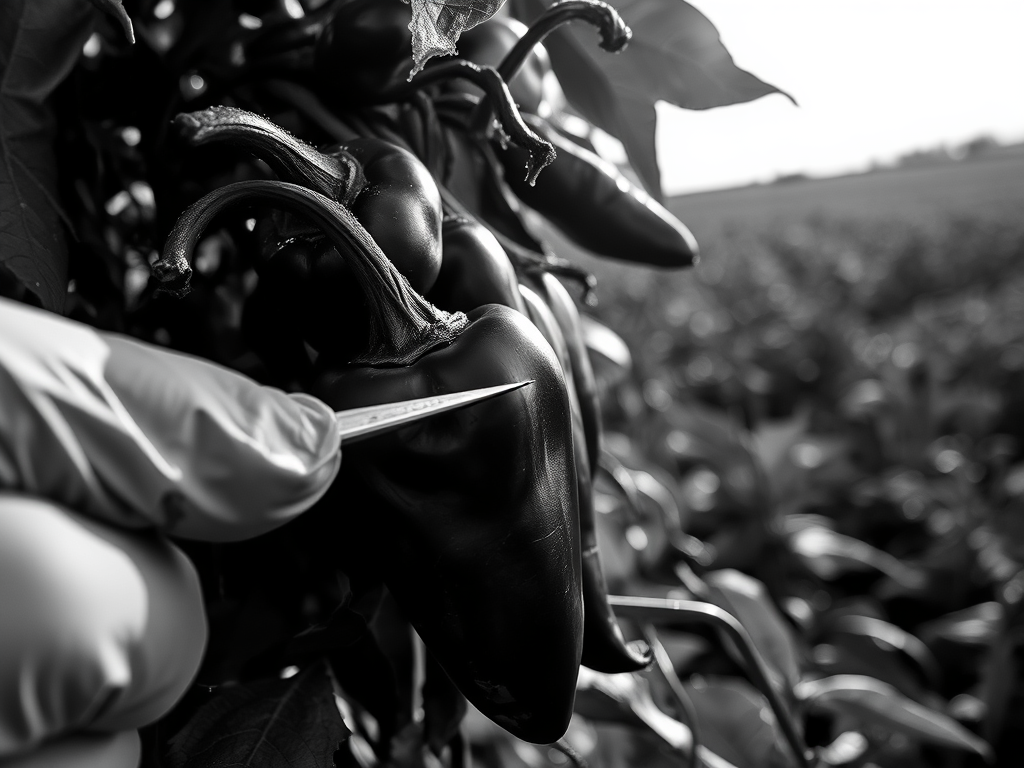
I thought for sure there would be a honey jar. But we did get a latex glove and hot peppers! And maybe that is tweezers.
The featured image here was taken in Bologna inside the Basilica of San Petronio which Rick Steeves said is one of the largest churches in Europe. I took some time taking pictures of lines outside some of the side chapels that dominate the church on both sides.
I like this one because it has a lot of texture as well as smaller lines that run in different directions from the bars that race toward the upper right corner.
Thanks for joining me today. Please leave a like if you can–I’m still trying to break the fourteen like barrier.
I was wrong about being able to “like” a post without logging in. I did some research and discovered it can’t be done. It makes sense though–otherwise the “like” feature could be easily manipulated. I’ll just have to be patient on my way to getting these elusive likes.
I’m pretty sure you can still post a comment though and not log in. You could always just say, “I really like this!” or the like.


Please leave a reply! No need to sign in :)