
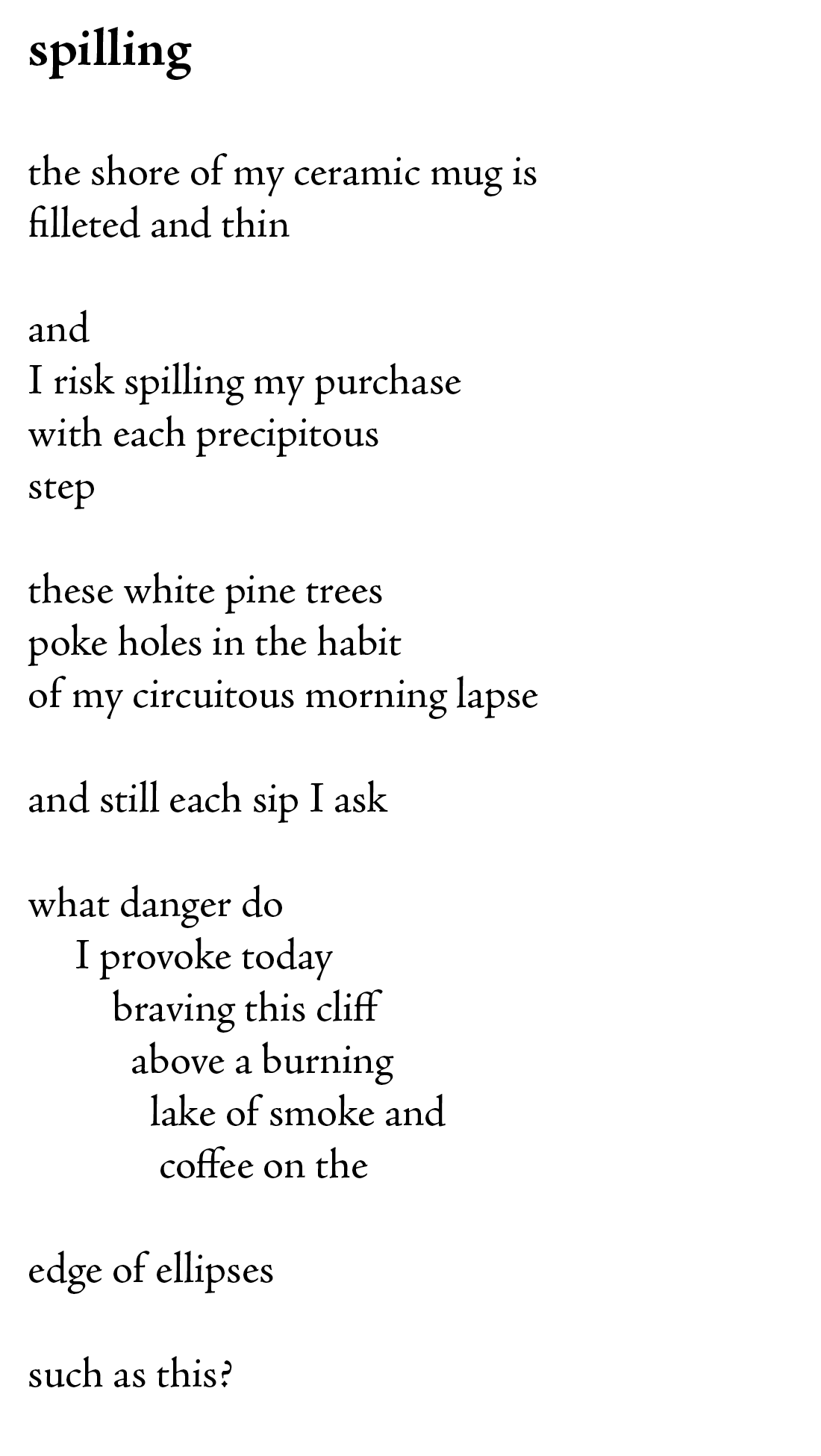
After finishing this poem, I started looking for an image to place with it, a coffee mug, perhaps, or a shoreline.
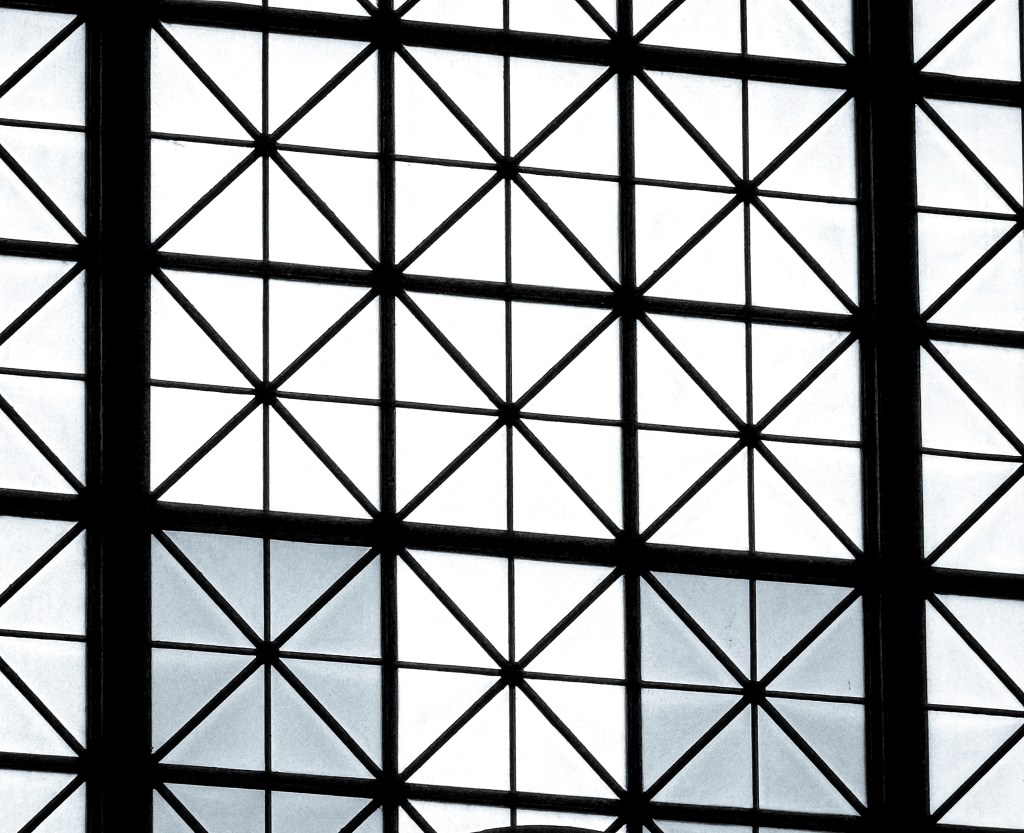
I then realized that I don’t really care if the image and the poem are directly connected. So I chose this image taken from Union Station in Washington D.C. I like its dark lines and triangles. It feels stark and crisp.
I had a hard time writing this morning. I continued working on a poem from yesterday until I finally set it aside to either work on later, or not.
I wanted to write a shorter poem today, and though this poem is shorter than some of mine, it isn’t quite what I was thinking.
I was also toying with writing something that was simply there, nothing hidden, no images that could be taken multiple ways.
This poem is certainly not that.
Last night I kept thinking that my poems were becoming too cerebral, too layered and attempting to be difficult, as if difficult poetry was better in some way.
I don’t want to write difficult poetry. I do want to be literary, but not to the point you need to get a dictionary out.
I think I’m driven by the need to be clever. Which has me ask myself, why?
And I don’t know the answer to that question. I don’t know why I might still, at 58, feel the need to be seen a certain way.
It feels like an adolescent need. Having taught middle school for all but three of my twenty-eight years of teaching I am perhaps prone to such patterns of thought.
I cannot help it though. I couldn’t just write a poem this morning about drinking a cup of coffee.
I took that coffee mug and imagined that the rim of the mug was a cliff above a lake and that if I got too close it would be easy to slip and fall in.
And if it was a cliff, there might be trees on the edge as the ones I remember from a trip to the north rim of the Grand Canyon. And it seems dangerous to get closer to the edge of such a place.
It also feels dangerous to talk about a poem I’ve just written or at least daring. But that is what I’ve taken to doing here, to try to capture the experience of writing a poem, to try to stay in the flow of those moments and comment about it.
I’ve tried to make this poem about two things–drinking a cup of coffee and approaching the edge of a cliff. I wanted each line to play with both of these ideas.
And because there are two things, I wanted them to enrich each other, to think about drinking coffee as actually taking a risk. And to think about taking a risk as something as mundane as taking a sip of coffee.
In this connection, I’m not trying to exhaust the connections that I might create. That’s something I’m not sure of here–have I overcooked the imagery? Have I pulled it out of the oven too soon?
I chatted with my poetry advocate (that’s Chat GPT if you’re new here) and made many changes to my original draft.
We went back and forth on the last line of the poem, for instance. I feel like it makes the poem whole because it resolves the cadence and lyricism of the lines whereas my poetry advocate suggested that maybe ending on “edge of ellipses” left the end hanging, created an “open-ended, trailing effect—almost like a silent ellipsis” as she said.
Well that seems pretty insightful, though I had to point out that ellipses represented two things here, both the feeling that there are things not being said here but also that this imagery is based upon the rim of a coffee mug, a circle being a specific case of the formula for a mathematical ellipse.
I added the word “circuitous” to the poem to tie this in more directly where I had before used the word “habitual”, referring to the repetitive nature of drinking coffee, of going through my morning ritual.
This stanza also ended with the word “lips” at first, my thinking that the pine trees would poke holes in the narrator’s lips while also “lips” seems like a shortened version of the word “ellipse”.
And maybe that is a better word than the one I went with here, “lapse”. “Lapse” though hints at the word “lips” while also hinting at the word “laps”, reinforcing the idea that this is a repeating scene.
As for the direct meaning of “lapse” there are a few ways for this to be interpreted too. It could be my forgetfulness, or my judgment (which the word “lapse” is often used with), or things that I’ve left out, suggestive of the “ellipsis” meaning later in the poem.
I toyed with naming the poem “. . . ” but felt that was too cute, too explicit. I also thought about using “. . . ” within the poem, but again, it felt too obvious.
And there again I’m battling this need to be seen as clever, balancing cleverness with being too clever.
My favorite word of the poem is “purchase”, serving as both a reference to buying a cup of coffee and also finding purchase on the edge of a cliff.
My favorite lyric moment is the rhyme of “lapse” with “ask”.
I attempted something visually with this poem, something I really haven’t done before. The indents in the third to the last stanza are trying to represent the fillet of the edge of the mug or the curve of an ellipse, perhaps. I sketched out the curve I wanted as a graph and then overlayed this onto graph paper to approximate how many spaces I would need for each line.
This is probably why, just now looking at the clock, I’ve been working here this morning on this for almost four hours.
That’s a lot of flow.
Our dog Remy has made a pile of pillows next to me, his way of asking me to notice him.
Now there’s a clever boy.
Here’s WordPress’s AI generated image for this poem:
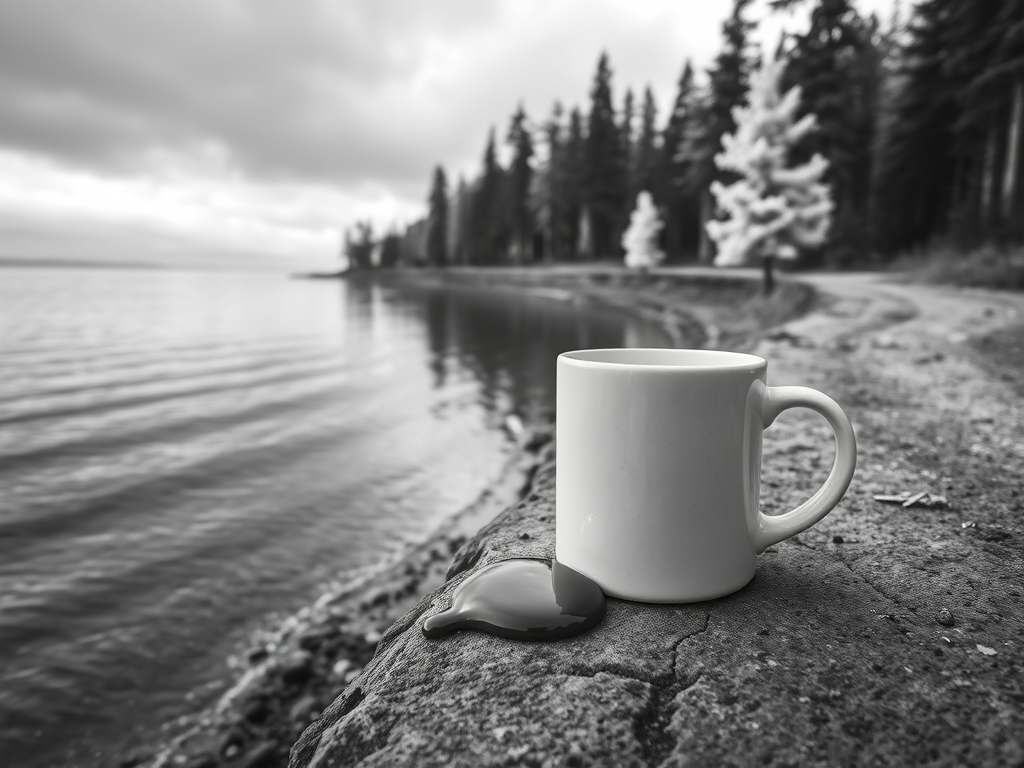
Nailed it!

 The Poet Projects
Leave a reply to apostrophe too – The Poet Projects Cancel reply