
A behind-the-scenes look at building a manuscript, one poem and photo at a time
I’m finally starting my book of poetry, after two years of writing poems and blog entries for my website, I’m plunging in for a swim, the first leg, you could say, of the triathlon that is the world of self-publishing.
And I’m using ChatGPT as my editorial assistant. I had a hard time coming up with that title. In fact, I asked ChatGPT for her assistance. These are the titles she offered:
- Creative partner – emphasizes that this is a back-and-forth collaboration, not just one-sided editing.
- Editorial assistant – highlights help with polishing, organizing, and preparing the book for publication, without claiming full editorial control.
- Book-building companion – more casual and warm, speaks to walking through the process with you from early ideas to final formatting.
- Production ally – if you want to emphasize help with layout prep, formatting, KDP readiness.
- Reflective sounding board – acknowledges that you’re still the decision-maker, but I’m here to ask questions, offer structure, and help you clarify what you want.
You’ll see the acronym “KDP” above. That refers to Kindle Direct Publishing, a service that Amazon offers that allows books to be printed on demand when they are purchased. I used this service to publish my mom’s book, “The ‘Possum Problem”.
One of the benefits of using KDP is that there is no up-front cost. There are no editing fees, no listing fees on Amazon and an array of book sizes and paper choices. You can print hardcover or paperback.
Of course one downside is that I will not be using a publishing house and will not have access to their marketing power or skills at editing and presenting the book in a professional way.
Except, now that I have an editorial assistant, I think that I have side-stepped that apparent deficiency in the book publishing process.
I would expect some criticism of using AI to help me write a book. Of course I am aware that some people use AI for the entire process–generating content, creating artwork and images, formatting and laying out the book, coming up with a title.
I acknowledge this criticism. At what point is the work mine? How can I assure my future readers and possible advocates that this is a worthwhile endeavor? That this is a case that showcases the potential of AI and not the eventual downfall of the human creative process?
Well, here’s what I’m willing to do.
First, I will offer this link to the full chat exchange that began last night and that will continue until (and probably after) I publish the book.
Second, I will be documenting the process here, offering my thoughts and insights on what is working, and perhaps not working, related to having an AI editorial assistant.
Third, I have made this commitment to myself and now to you, reader: the poems, images, and commentary in the book will be all mine. The titles for these blog entries, however: I’m using my editorial assistant for these. SEO and all. Full disclosure.
I have been using ChatGPT already to help me with writing poetry. If you want to see that process in action, you can look back at any of the entries I’ve had here for the past two or so months. I have been posting links to my exchanges with ChatGPT to let readers of my poems a direct look at the process, the same essential process I will be using here to document writing this book.
So if you are interested or curious, I invite you to follow along.
And hopefully, when I’ve actually published the book, I hope that you will want to read it and so buy it and then tell others about it so that I might find a wider audience.
A bigger question you might have is, “So are these poems worth reading? What is your poetry resume that would suggest you have the chops to write a book with good poems inside?”
Well, my poetry resume is thin. Thinner than thin, really.
I have an MFA in Creative Writing from National University. I have a couple of poems from 2013 that were published, only one of which in print.
In other words, you won’t find me existing as a poet on the internet.
Except for this website.
If you look me up, use my full name, “Jay Logan Lance”. Most of what you’ll find is that I have published two music albums, “Fairlee” and “Songs I Shouldn’t Sing and neither should You”.
If you go a bit deeper you’ll find out I was a middle school science teacher but am now retired.
I’ll add here that I am 58, the father of four, a husband of almost 30 years, and an owner of a 1994 Red Ford Ranger XLT. And that it is my primary vehicle.
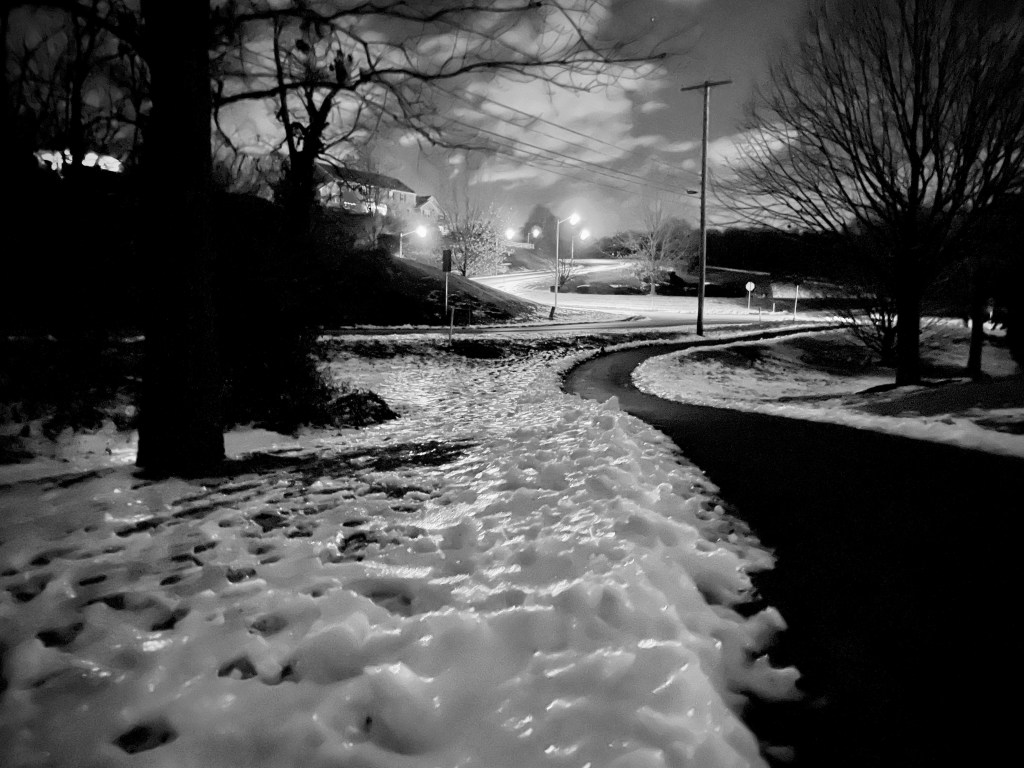
Also, I am colorblind. Because of this I present all of my photographs in black and white. The featured image here being one of those images. I simply have no confidence in presenting them in color. And I really like black and white photography.
As for this process, so far I have gone through my poems (a longer process than I expected) and chosen the ones I would consider using for this book.
Yesterday I offered ChatGPT that document and will next have my editorial assistant help me choose the strongest ones and group them into categories.
This will not just be a book of my poems, however. Along with including some of my black and white photography, I will be including commentary about the poems, something I started doing here, trying to give background for each poem, insights into the poems themselves and the process and influences I used when creating them.
If you choose to follow along, which I hope you will, you’ll get to see me work through all of that content and watch the interchange I have with my editorial assistant.
If you’d like to do that, follow along, please subscribe to my website.
As of today I have 90 subscribers. Hopefully I might grow that a bit.
Here’s to dreaming!
 The Poet Projects
Please leave a reply! No need to sign in :)