
My first memory of knowing where I lived was when I was three going on four. We lived in a small two-story brick house on Cranston Road in University Heights, a suburb of Cleveland, Ohio.
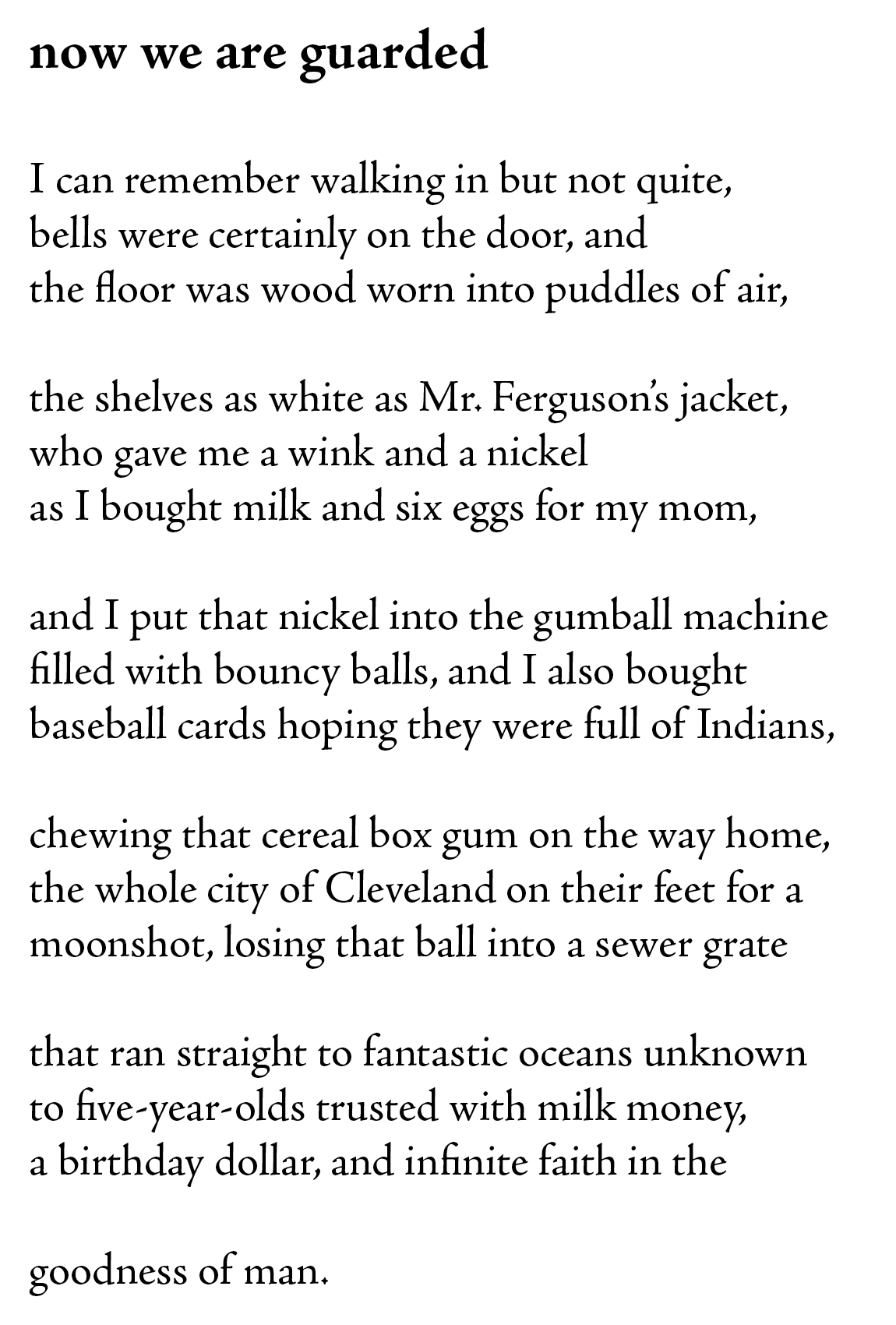
This poem is set on that street in that time, the late 1960’s and early 1970’s. There was small store at the end of Cranston on Silby, what you might today call a mom and pop shop.
Cranston was a wonderful street, full of ethnic and racial diversity, safe from speeding traffic and a road where parents felt comfortable letting their kids play outside with the neighbor kids, wandering from house to house, riding bikes on the streets, even going into the neighbor’s houses when invited.
I’m not sure such a street exists now. But back then, that’s all I knew. Except when my friend Michael from just down the street stole the wheels off of my plastic lawnmower, there was no controversy in our neighborhood.
Of course I was a kid and certainly there were grown up things going on, neighbors who disliked so and so, disapproval for the way kids were allowed to dress, parents who kept their kids inside unless supervised.
If so, I didn’t know it.
The store wasn’t run by a Mr. Ferguson, but I have forgotten the store’s name and it certainly is not there anymore. The poem alludes to this, “I can remember walking in but not quite” as I have memories, but they are mostly of standing in the store itself, of the gumboil machine, of the packs of baseball cards.
I remember them selling Wacky Packs, a baseball-card-esque pack filled with stickers that parodied popular brands. There was a stick of gum, the type that was flat and rectangular and tasted wooden, that had a bit of enjoyment after it softened but then it almost dissolved in your mouth.
I probably bought Wacky Packs more than baseball cards, but I couldn’t get the poem to work with those.
I wrote this poem as a paragraph first, thinking to get down the imagery before I thought through line breaks and stanzas. That worked this time, I think, though the line breaks here might seem hard and fast, this poem could have been broken up many different ways that might also have worked.
I am reading Good Poems by Garrison Keillor and was taken with his discussion of the poem “A Blessing” by James Wright. Keillor writes,
Wright’s poem about himself and his friend climbing through barbed wire to visit two horses in a pasture is one that gets read at weddings and memorial services, has been done in needlework and carved into wood, and appears on a brass plaque at an interstate rest stop near Rochester, Minnesota.
Perhaps vanity gave me the instant thought, “I want to write a poem like that”.
I read Wright’s poem over and over for a while, then placed a check next to the title and underlined a few words and randomly opened the book to another poem, this time “Woolworth’s” by Mark Irwin.
There are several five and dimes I remember from growing up in the midwest. The store on Silby off Cranston street was not a five and dime though, not technically, not the way Woolworth’s was, full of everything. The store here was a corner store, a mom and pop shop, run by a neighbor, a place you could count on and could trust when you sent your four year old alone to get eggs.
The title “now we are guarded” is both a reference to the world we live in now, a contrast between the innocence of the poem’s time and the protective way parents now guard their children against dangers.
I don’t mean to suggest that one is better than the other. We just know about so many, many dangers now that we didn’t know about then.
They were there, though. I know this because my sister Cara was abducted from a department store not far from our house on Cranston.
My dad had my two younger sisters and I at the store together. He told us to hold hands at all times. We must have been cute, the three of us, and especially my sister Cara who was adorable, her black hair and ever-present grin shining like a light.
A woman came up to us, took Cara’s hand and led her away outside the store and into the parking lot when Dad had gone to look at something, turning his head and trusting the world as all parents did back then.
When he found just Mandy and I alone he must have rushed outside where he saw a woman leading Cara away by the hand toward her car.
Dad called to her and Cara turned and came back to him.
So the abduction failed and the three of us went home and grew up together continuing to believe that our world was safe despite some pretty clear evidence to the contrary.
I do not remember any of this, I should add. Dad told us the story many years later and I think my mouth is still open about it.
The biggest mystery, or miracle, is why dad looked outside first? Maybe we pointed. But maybe it was his instinct, a gut reaction.
The title of this poem is also a reference to the baseball cards and the “Indians” I am hoping for. These are the Cleveland Indians who are now called the Cleveland Guardians. “Guarded” is a reference to their new name, of course, serving double duty here.
In our discussion of the poem, my poetry advocate said, “Honestly, it might be the perfect title.” You can read that actual discussion here where you’ll discover, if you didn’t know, that my poetry advocate is Chat GPT.
You’ll see also that I was cautious to use the word “Indian” here. The title serves also as a way to say this, that I am aware that this might come across as insensitive, that I am guarded as I use it.
My first title was “moonshot”, a word from the poem which ties the poem not only to baseball and a home run that goes so far it can be called a “moonshot” but also ties the poem to the era of the United States going to the moon.
It felt right, but I usually don’t use words from the poem for the title, at least not often. The title serves as a way to give context to the poem and to add meaning if a poet chooses to use it that way.
Ok, time for the WordPress AI to generate an image based on the poem:
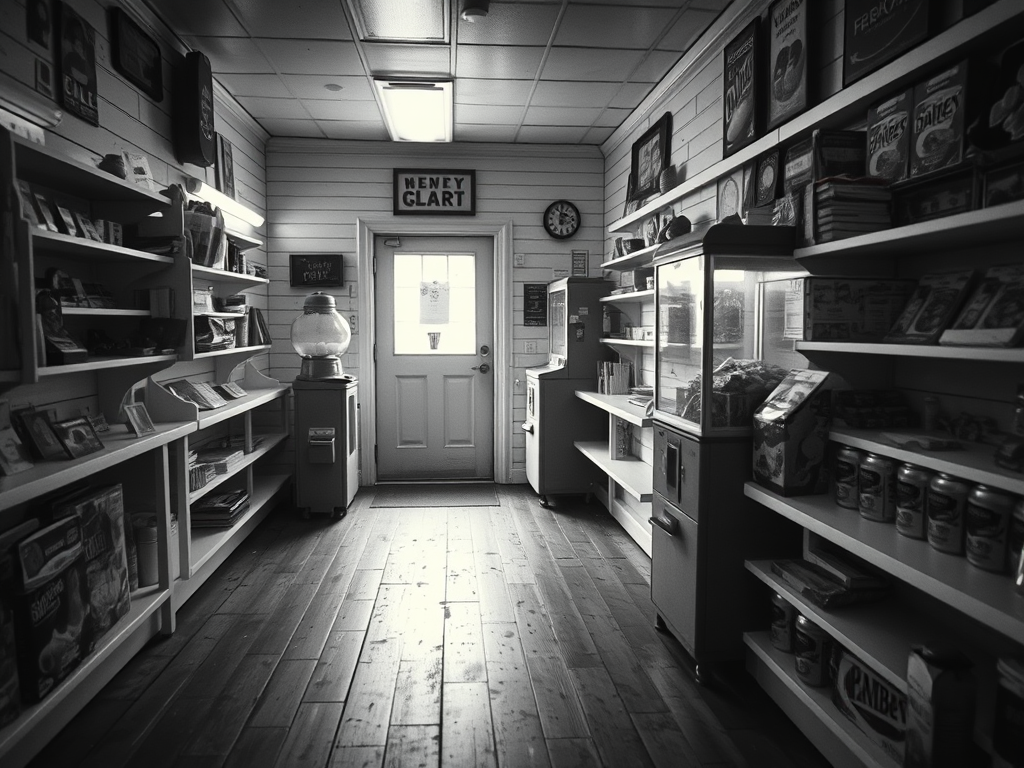
Huh. That’s pretty amazing.
The featured photo for this poem was taken out the window of my moving car. I love this tree, pointing it out to everyone I might be driving with as we pass it. It sits in a field below power lines but has the archetypal tree shape, the canopy fully rounded, the trunk just the right girth and height before the branches burst from it.
The tree that I use as a logo for this site is an attempt to capture this particular tree, the product of a two-year old AI generated image done in an early version of Photoshop’s AI engine.

 The Poet Projects

Please leave a reply! No need to sign in :)