It was bound to happen, that I would expand the projects included under the umbrella of the Poet Projects, my website.
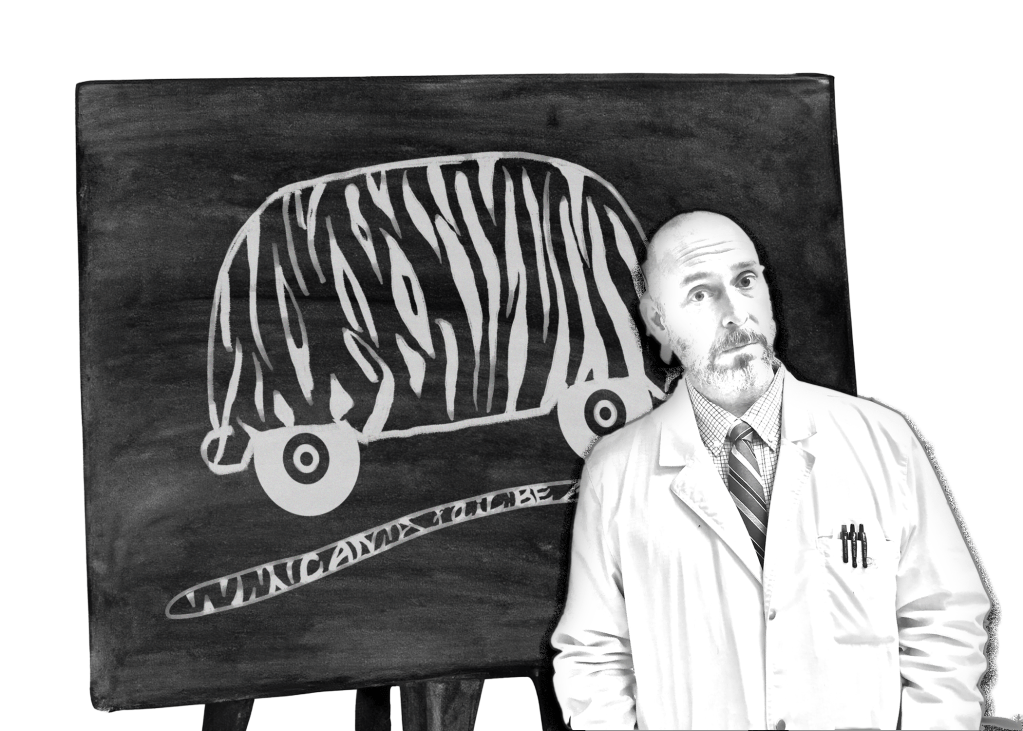
In this case, I am introducing a series of children’s poems. This poem, “Dave’s Tiger’s Tale” is one of many such poems that I wrote a few years ago and filed away. I think it is actually the first of the ones that I wrote for kids, though I have not kept adequate track of such things.
The inspiration for my children’s poetry is Shel Silverstein. Shel Silverstein’s poetry works on many levels, giving the reader substance and not just silliness.
It’s also just plain fun to read. A lot of fun.
I’m not going to do this, but I would guess that doing an internet search of “best poets for children” will put Shel Silverstein somewhere on that list.
Having said that, I really want to do the search. I’ll stick to my commitment, though.
No search for me.
Silverstein’s poems sometimes get dark, a lot darker than many parents might be comfortable with, noting that his most popular book, “Where the Sidewalk Ends”, has been occasionally banned in libraries.
Perhaps this poem about a tiger is too dark, seeing as the tiger eats the narrator and her friends.
Yep, thinking about it, that’s a bit dark.
And yet, here it is, the first of the poems I offer especially for kids.
As I came back to this poem, what I really liked about it was the word play. The most obvious example of this is the play on the words tale and tail.
There is another play on the word “bad” and what it means for something to be bad. We all know that bad has multiple meanings, as for instance the difference in meaning between a bad child versus a bad story. Here, I suggest that the meaning for a person be applied instead to a thing.
With kids’ poetry I also feel more freedom to play with rhyme. When I say play, I mean not just make the lines rhyme, but to experiment with slant rhyme and internal rhyme and assonance and alliteration. Adult poetry that rhymes has fallen out of style, for the most part. At least for end rhyme and obvious rhyme.
Really, that’s one of the distinguishing things that separate so-called adult versus kids poetry–the ease of grasping the meaning on a first read. Or a second read. Or on any reading.
I have loved every English writing or literature class I ever took, but I will say that I often read poetry and had no idea what was going on. And I noticed that my teachers, who I also have great affection for, sometimes respected the poem and/or poet for their ability to be dense and to obfuscate.
My best teachers were able then to walk the class through the poem and to show what the poet was doing and why they were doing it. In those cases, discovering hidden meaning and patterns was thrilling. Emily Dickinson is my favorite poet where I feel rewarded with what seems at first to be hidden the more I examine her poetry.
Children, though, also love magic tricks, love to find hidden pictures. When I went to the doctor as a kid I couldn’t wait to get the office copy of Highlights magazine and find the hidden picture page.
Poems, then, that hide things, at least at first, are good for kids. When there are things going on that surprise the reader once found, I love that.
What I didn’t love was finding out that someone had taken a pencil or pen and circled all of the hidden pictures. Grrrrr.
Another difference between poetry for children and for adults is the content. One type of hidden meaning that I never will never intentionally use is double entendre, not in something that clearly is meant for children.
I’m a big fan of Sponge Bob. Not everyone my age is a fan though. Sometimes it is because it is too silly and ridiculous. Other times though it is because it seems too dark and suggestive.
And that’s a gray area for me. I’m sure I can find suggestions of inappropriate ideas for children in the episodes and the iconography. Yet finding those things feels like an interpretation that goes looking for the problem.
It’s akin to the idea that you can support any argument with statistics, that if you limit the scope or expand the scope or structure the analysis or modify the explanation then you can support any old interpretation you want.
I just choose to enjoy Sponge Bob. I let my own kids watch him. I watched with them. I still watch him and they don’t even live at home anymore.
I am, as most all of us are, I think, a kid at heart.
And I love writing poems for kids.
So here you go. The first of, I hope, many.
 The Poet Projects
Please leave a reply! No need to sign in :)