

My mornings often begin with puzzles. First, the “Hard” sudoku from the New York Times. I print it out so that I can use an actual pencil. Those pencils fill our junk drawer in the kitchen, sharp and unsharp, short and not, erasers mostly rubbed away or hardened, such that erasing with them tears the paper or makes rough dark marks that cannot be erased, a bit like some memories.
I’ve also begun completing the NYT Spelling Bee puzzle, thanks to my son Jack and his fiancée Ellie, who mentioned it a couple weeks ago. I had dismissed it, thinking I was a logic-puzzle person, and then I discovered the great reward of moving up their categorical ranking, from Beginner to Genius.
The puzzle is a bit Scrabble and Jumble and Boggle, games where you have letters in front of you and you must turn them into words. There is still logic, of course, but an entirely different part of my mind is engaged. I imagine scientists examining my brain with a Functional MRI scan first while I complete a sudoku, then Spelling Bee, different regions pulled out of shadow into bright activity, dark corners of my mind released into light.
I’m puzzled though how such a scan works, how I might do these puzzles with my head inside an MRI machine, how I might overcome my claustrophobia to concentrate on a puzzle. I’ve had a few MRI scans and I have definitely squeezed the ball that releases me from the tunnel, the panic coming sudden and thorough, my brain scrambling, my muscles twitching, arms wanting to stretch above my head.
This is Edgar Allan Poe’s fault, I’d say. His short story “The Premature Burial” did me in many years ago, giving my imagination a chance to suppose that I was buried alive in a coffin, arms and legs trapped, oxygen slowly used up, without light, without hope, without escape.
I’m not sure the story is needed, not in my case. That simple thought of entrapment is enough. Poe writes of the horror of being buried alive in “The Cask of Amontillado” as well, where Montressor chains Fortunato to the back of a vault in the catacombs he’s lured him into, then brick by brick walls him in, matching his screams with his own.
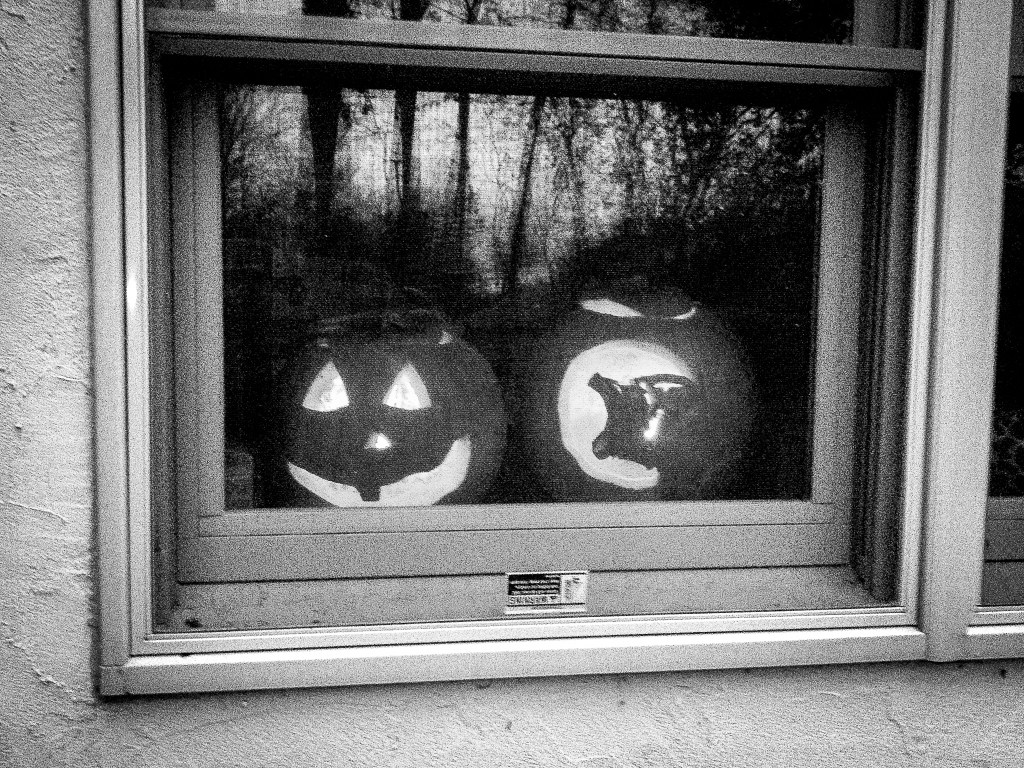
Compared to being trapped in a coffin, I could handle a brick wall, chains, and the damp cold. Maybe a ghost would show up to keep me company. Sure, I’d scream until my vocal chords snapped, but at least I could stretch out my arms.
I suppose I am afraid of ghosts, though I cannot conjure such terror without some serious imagining. The ghosts I grew up with were Casper the Friendly Ghost and whatever ghoul Scooby Doo and the gang were chasing that episode.
I’d be fine with ghosts except for my sister Cindy and my cousin Cathy, both a few years older, who would throw parties for my two younger sisters and I at New Year’s Eve and the Fourth of July. And, one year, Halloween.
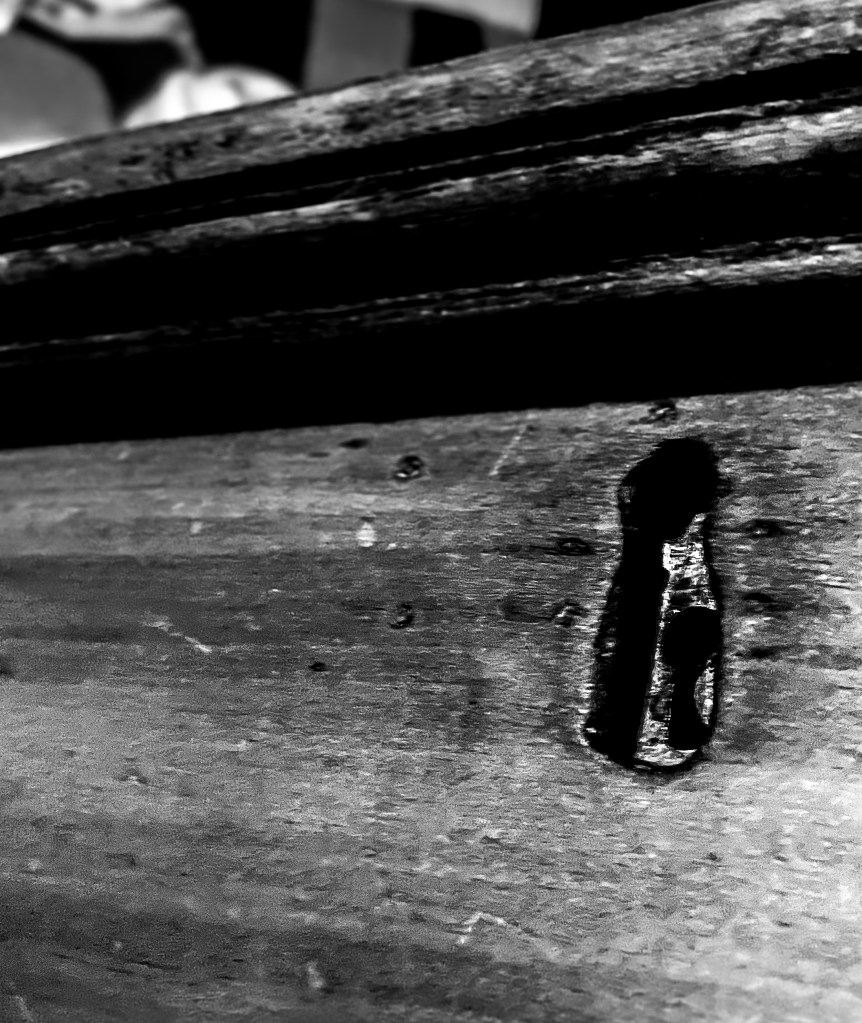
My grandma had a wooden quilt chest with a keyhole that sat in a bedroom upstairs, a room I remember being dark and cold, a room I wouldn’t go into on my own, that even now makes me feel cold and small, fog gathering behind me, shadows growing out of the corners of the room, the closet door ajar, the sheer gray curtains sifting slowly back and forth though the windows were always closed.
Cindy and Cathy tag teamed the story, luring my younger sisters and I into the room and sitting us in front of the chest, one lonely long tapered candle in Cathy’s hand, the door slamming behind us though Cathy and Cindy were in front of us.
Cathy told the story of the chest, handed down generation to generation, its current owner periodically hearing a noise from the room it was in and candle in hand inspecting it, each time finding nothing but shadows and silence.
Until one night the noise persisted, part whisper, part scratching, each sound sifting quietly through the room we sat in as well, so softly I wasn’t sure at first but gradually there it was, a fingernail perhaps on wood, or was it a whisper, or fabric against fabric slowly sliding whisk whisk whisk.
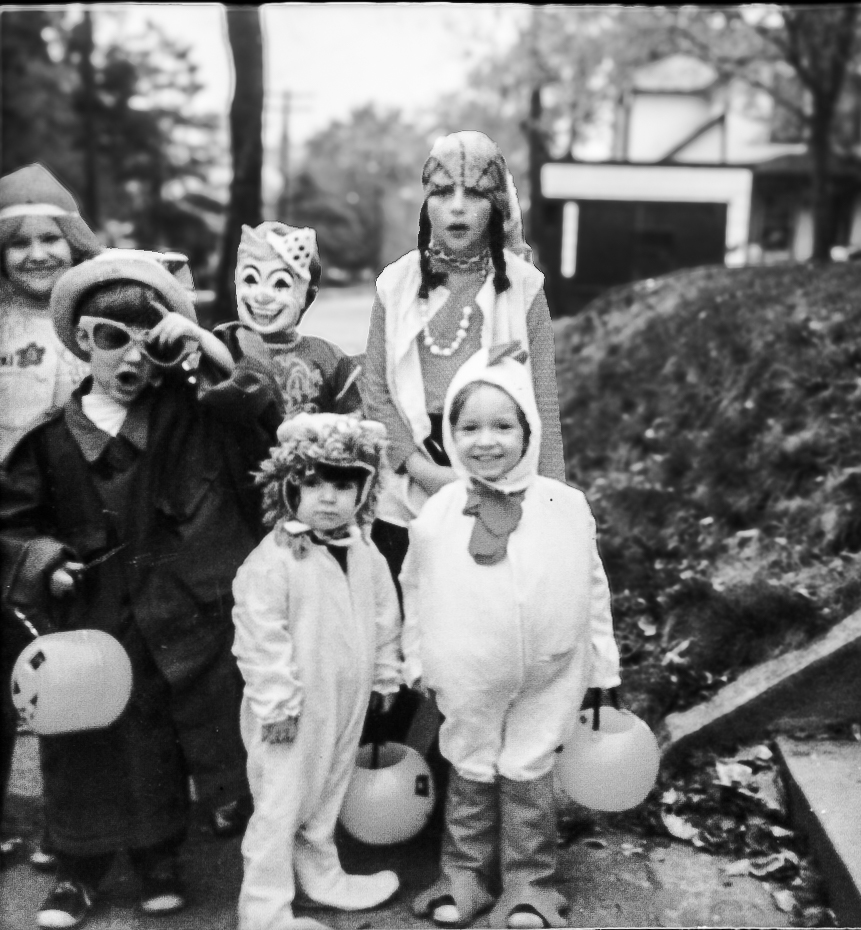
Each time he heard the sound, the owner investigated, slowly opening the creaking door, the light from the candle stretching into the room, finding nothing save silence and shadow.
Over the years the sounds came again, each time louder, more specific, a groaning and the sound of metal on wood, the rattling of a key, clearly coming from the cold, dark room, that room again silent as soon as the door creaked open.
Cathy’s candle moved back and forth in front of the chest until one pass found a skeleton key on the wooden floor beneath the chest. Cindy gasped at that and Cathy seemed unnerved, as if the discovery wasn’t planned. We heard a bang somewhere in the house, certainly our grandparents’ dachshund in the kitchen, or the grownups playing dirty clubs in the dining room, or just one of those mysterious sounds you are sure you heard but can only guess at the source.
“Did you do that?” Cathy whispered to Cindy. Cindy shook her head. Cathy looked unnerved until she slowly grinned, the candle below her chin, her eyes dark holes of shadow and terror and glee.
The owner heard the noises again, louder, persistent, this time the whisper of their name said over and over, harsh, insistent.
The owner opened the door slowly, the creak drawn out. No voices anymore, just a scratching sound coming from inside the chest, and this time a ghostly finger coming out of the keyhole, beckoning the owner to come forward, his hand reaching out for the lid, unable to resist, until he opened the lid and climbed inside.
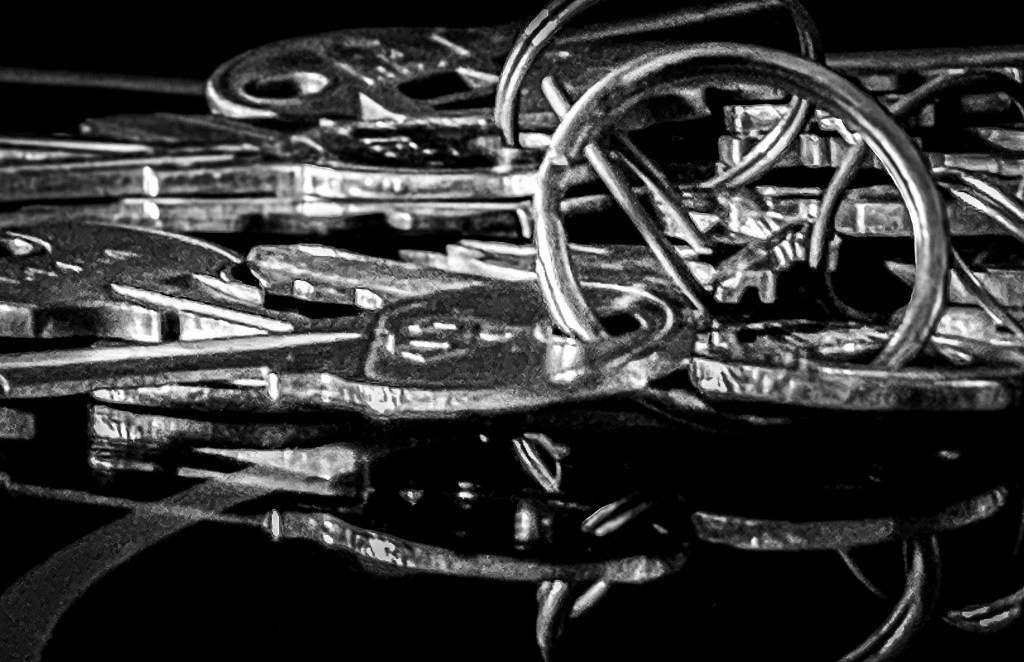
At that point we heard a sharp clunk, the sound of a marble landing on a wood floor. Cathy cast her light on the ground searching until she found a dark round object in the same spot she’d found the key. She held it out for us, a small class ring in the palm of her hand. Quietly, she lifted the lid of the chest and placed the ring inside, waiting for the next owner to place it on their finger as they climbed into the chest never to be seen again save their ghostly finger curling over and over from the keyhole.
I made it a point to rarely tell my own children ghost stories, knowing how well the terror can persist over years, how horror morphs over time, conjuring images from dark closets and cupboards, the original story itself growing with detail and nuance, each retelling in our heads adding whispers and names clearly called and faces in dark windows and angry men hiding in the woods and scratches on wood floors and footsteps on stairs.
Years before my dad died he promised me, as part of some ghost story he had told, that he would come back as a ghost when he died and tell me what heaven was like. “Be patient,” he said. “I’ll show up one night and give you the whole story.”
He has shown up many times over these past eleven years, though only in dreams. My sisters Amanda and Cindy have felt his presence many times as well, both in dreams and in their houses and their yards, as sure of him there as they were of the floor or the windows or the trees or the grass.
The most vivid, convincing story of my dad coming back to visit happened the night he died. My sisters and mom and I were gathered around his bedside as he let go, there one moment then gone. I looked around, sure I’d notice him somehow, but nothing.
At his funeral I took time to talk to my Aunt Beverly, who told the story of waking suddenly the night dad died and seeing him at the foot of her bed, telling her he was going, that she should tell everyone he said goodbye and that he loved them, on his face that mischievous grin that everyone knew so well.
She had noted the time she woke; it was the exact moment we had said goodbye standing around his bed.
That’s enough proof for me that this world is full of surprise and wonder, that there is more than we see and hear, that life is a mystery and some kind of dream, that there are true stories and made-up stories and stories in-between, both made up and real, facts and fictions, whispers and bangs and creaks and shadows and candle-lit grins.
There is a small bird outside the window right this moment perched in a short holly bush, less than three feet away, just the glass window and screen between us, his head twitching side to side as if he hears or sees things I don’t hear and see. His head pauses to stare at me for a long moment, as if he knows me, then he flits off, disappearing into the damp autumn woods.
After my grandma moved into the nursing home many years ago, her dementia become her reality, the cousins all met at her house in Canton, Ohio prior to its sale. My cousin Elaine outlined a plan for us each to have some of her possessions, her china, her cut glass bowls, the Amish-made cupboards, the quilts, the silverware and the glass figurines. We would take turns, names drawn out of one of grandpa’s hats, moving around the house and selecting before we all joined to clean out the items unchosen that would head to the estate sale or the dump.
The chest sat unchosen through several rounds until I took it, reluctantly, knowing full well that I’d be climbing inside it someday, some dark night, curling myself into a tight ball, my arms and legs trapped, terror overcoming me like shadow and mist, the lid locked tight as my fingers scratched and clawed against it, until I heard the sounds of someone moving around outside the chest and did my best to call to them, finding the ring at the bottom of the chest, slipping it on my forefinger and sliding that finger out through the keyhole, beckoning someone, anyone, to take my place.
 The Poet Projects
Please leave a reply! No need to sign in :)